Slow Your Roll: Why Posting Links Less Often Actually Makes People Click More
There's a deeply ingrained belief in digital marketing that more is more. Post constantly. Share everything. Stay top of mind at all costs. And sure, that logic sounds right — but the data tells a different story, and it's one that a lot of creators don't want to hear.
Sharing your links less frequently, with more intention, consistently outperforms the spray-and-pray approach. It's counterintuitive, a little uncomfortable, and completely worth understanding.
The Problem With Flooding the Feed
Let's call it what it is: link fatigue. It's what happens when your audience has seen so many URLs from you that they've stopped registering them as worth clicking. Their brain has quietly filed you under "background noise."
This isn't just anecdotal. Research into content consumption habits consistently shows that audiences have a finite attention budget. When you blow through that budget by sharing five links before noon, you're not building momentum — you're burning goodwill. By the time you post your actually important piece, your audience has already mentally checked out.
Think of it like this: if a friend texted you 12 articles every single day, you'd stop opening them. But if that same friend sent you one link a week and said, "You really need to read this," you'd probably click it immediately. Scarcity creates signal. Abundance creates static.
What Link Velocity Actually Means
"Link velocity" in the SEO world usually refers to how fast you're acquiring backlinks. But there's a user-facing version of the concept that's just as important: the rate at which you're pushing links to your audience across channels.
High link velocity — posting constantly across Twitter/X, LinkedIn, newsletters, Slack communities, Instagram bios, and Discord servers all at once — creates a fragmented, overwhelming experience. Your audience doesn't know what to prioritize, so they prioritize nothing.
Low, deliberate link velocity does the opposite. It signals to your audience that when you share something, it matters. You're not crying wolf with every new tab you open. You're curating.
Platform-by-Platform: How Often Is Too Often?
Different platforms have different tolerances, and ignoring that is a fast track to tanking your engagement rates.
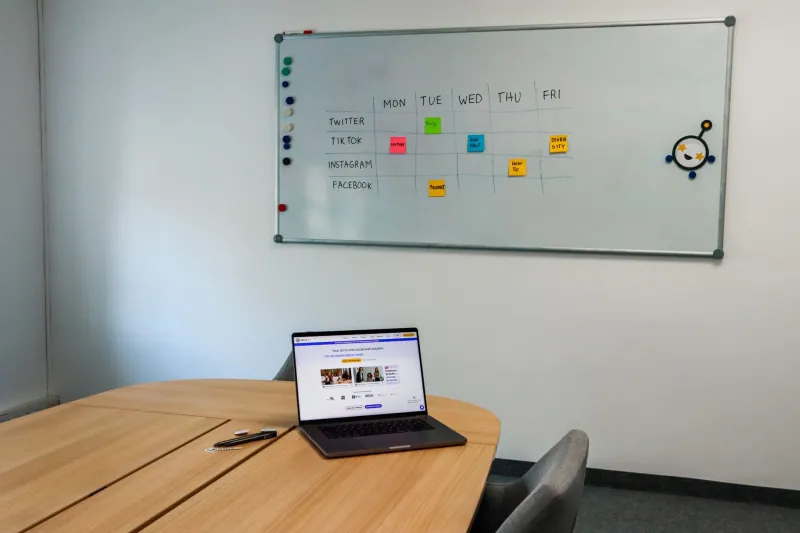
Twitter/X: The platform technically rewards high posting frequency, but link-heavy tweets perform worse than text-first content. If you're sharing links, three to four times per week with meaningful context around each one tends to outperform daily link drops.
LinkedIn: This one surprises people. LinkedIn's algorithm actively suppresses posts with external links in the main body. Sharing links in the comments, or limiting link posts to two or three per week, typically yields better reach and engagement than daily sharing.
Email newsletters: Weekly is the sweet spot for most audiences. Daily newsletters with multiple links feel like homework. One well-chosen, well-explained link per send can drive higher click-through rates than a roundup of ten.
Instagram: The single bio link model forces intentionality by design. Tools that let you manage a landing page of links (rather than swapping one link in and out daily) tend to perform better because they give followers a stable destination.
Real Creators Who Slowed Down and Won
A content strategist in the B2B SaaS space documented what happened when she cut her LinkedIn link-sharing from daily to three times a week. Over 60 days, her average click-through rate on shared links jumped by roughly 40%. Her explanation? Her audience started treating her links as recommendations rather than spam.
A newsletter writer focused on independent film dropped his weekly link roundup (eight to ten links per issue) in favor of a single "link of the week" format. Subscribers who previously ignored the roundup started replying to the single-link emails. Engagement went up. Unsubscribes went down.
A podcaster who had been sharing episode links every day across five platforms pulled back to three platforms, three times a week, with a short personal note on each one. Download numbers per episode increased, not because more people saw the links, but because more people trusted them.
None of these people had bigger audiences after slowing down. They just had more attentive ones.
The Psychology Behind the Pause
There's a well-documented psychological principle at work here: reactance. When people feel overwhelmed or pressured by constant information, they instinctively pull back. They don't engage — they retreat.
On the flip side, intermittent reinforcement (the same mechanism that makes social media scrolling so addictive) works in your favor when you're the one controlling the schedule. If your audience knows you share something genuinely good every Tuesday, they'll start looking for it. You become a ritual instead of a reflex.
This is also why tracking your links matters so much. Without click data, you're guessing about what's working. With it, you can actually see which posts drove traffic, which platforms converted, and — crucially — whether your sharing frequency is helping or hurting.
Building a Smarter Sharing Cadence
If you want to stop the spray-and-pray habit, start here:
Audit your current output. How many links are you sharing per week, per platform? Most people are shocked when they count it up.
Pick your power slots. Identify two or three time windows per week per platform where your audience is most active. Save your links for those windows.
Add context, always. A bare URL is easy to skip. A link with a one-sentence explanation of why it matters is much harder to ignore.
Track everything. Use a link management tool that gives you click data so you can see which shares are actually driving results and which ones are just noise you've been generating out of habit.
Give yourself a weekly limit. Decide in advance how many links you'll share per channel per week and stick to it. Constraints force prioritization, and prioritization is exactly what your audience needs from you.
The Frog Doesn't Leap at Every Fly
Here at LinkFrog, we spend a lot of time thinking about the relationship between links and attention. A frog doesn't snap at every bug that floats by — it waits, watches, and moves when the moment is right. Your link-sharing strategy should work the same way.
The goal isn't to share everything you find. It's to share the right things at the right time, in a way that makes your audience trust that clicking your links is always worth their time. Slow down. Be selective. Watch your engagement climb.